7 Reverse Proxy Hacks for Ultimate Crawl Control
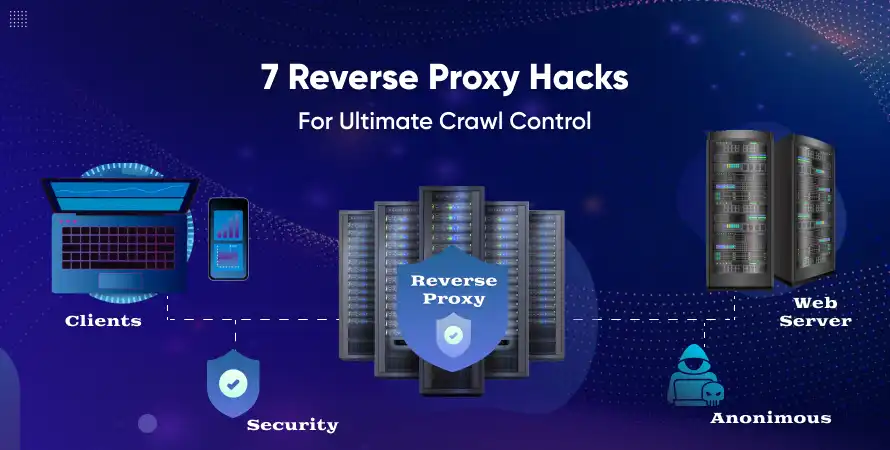
Reverse proxies are powerful tools that sit between users and your servers. They can transform how search engines crawl your site. For businesses using bubble no code platforms or traditional development, understanding reverse proxy optimization is crucial for better SEO performance.
This guide reveals seven practical reverse proxy hacks that improve crawl efficiency. Whether you're running an ecommerce site or a B2B platform, these strategies will help search engines index your content faster and more effectively.
What Is a Reverse Proxy and Why It Matters for SEO
A reverse proxy acts as an intermediary server. It receives requests from search engine bots and forwards them to your origin server. This setup gives you complete control over how crawlers interact with your site.
For bubble no code app builders, implementing reverse proxy settings can be challenging. However, the SEO benefits are worth the effort. Reverse proxies help you manage crawl budgets, reduce server load, and deliver content faster to search engine bots.
Search engines like Google allocate a specific crawl budget to each website. When bots waste time on low-value pages, they miss important content. A properly configured reverse proxy ensures bots focus on pages that matter most for your rankings.
Hack 1: Implement Smart Caching Rules
Caching is the first line of defense for optimizing crawl efficiency. Set up your reverse proxy to cache static resources like images, CSS files, and JavaScript. This reduces server load and speeds up page delivery to search engine bots.
For a bubble no code platform, configure cache headers to tell bots which content changes frequently. Dynamic pages should have shorter cache times, while static resources can be cached longer.
Create separate caching rules for different content types:
- Product pages: 1-4 hours
- Blog posts: 12-24 hours
- Static assets: 30 days
- API responses: 5-15 minutes
According to Moz's technical SEO guide, faster page loads directly impact crawl rates. Search engines can crawl more pages when your server responds quickly.
Hack 2: Set Up Intelligent Bot Detection
Not all bots are created equal. Your reverse proxy should distinguish between legitimate search engine crawlers and malicious bots. This protects your crawl budget from being wasted on bad actors.
Configure your reverse proxy to identify bots by:
- User agent strings
- IP address ranges
- Crawl patterns
- Request frequency
For businesses offering ecommerce SEO services, bot management is critical. Malicious bots can scrape pricing data, overwhelm servers, and trigger duplicate content issues. A well-configured reverse proxy blocks these threats while welcoming legitimate crawlers.
Implement rate limiting for each bot type. Google's crawler should have higher limits than less important bots. This ensures your most valuable SEO opportunities get priority access.
Hack 3: Create Dynamic URL Rewriting Rules
URL structure affects how search engines understand your site architecture. Use reverse proxy URL rewriting to create clean, SEO-friendly URLs without changing your application code.
For bubble no-code development projects, URL rewriting solves common issues like session IDs and tracking parameters. These elements clutter URLs and confuse search engines.
Transform messy URLs into clean ones:
- Before: /product?id=12345&ref=email&campaign=summer
- After: /products/summer-collection/item-12345
Dynamic rewriting also helps with canonical URL management. Point multiple URL variations to a single canonical version, eliminating duplicate content issues that hurt enterprise SEO services efforts.
Hack 4: Optimize SSL/TLS Termination
SSL/TLS termination at the reverse proxy level improves both security and performance. This hack reduces the computational burden on your origin servers while maintaining secure connections.
When implementing bubble SEO strategies, proper SSL configuration ensures search engines trust your site. Google gives ranking preference to HTTPS sites, making this hack essential for affordable SEO services for small business owners.
Configure your reverse proxy to:
- Handle SSL/TLS handshakes
- Use HTTP/2 for faster loading
- Enable OCSP stapling
- Implement HSTS headers
Neil Patel's comprehensive SEO guide emphasizes that site security and speed work together. A reverse proxy that manages both aspects creates optimal conditions for search engine crawling.
Hack 5: Implement Geo-Based Content Delivery
Geographic load balancing through reverse proxies ensures search engines access your content from optimal locations. This is particularly important for businesses serving multiple regions.
For bubble no code app development, geo-routing can be complex. However, a properly configured reverse proxy handles this automatically. It routes crawler requests to the nearest server, reducing latency and improving crawl rates.
Set up geo-based routing for:
- Regional product catalogs
- Localized content versions
- Currency-specific pricing pages
- Language variations
This approach supports bubble local SEO strategies by ensuring search engines index the correct regional version of your content. When Googlebot crawls from different locations, it sees the most relevant content for each market.
Hack 6: Monitor and Log Crawler Activity
Detailed logging at the reverse proxy level provides insights into crawler behavior. This data helps you optimize your SEO strategy and identify technical issues before they impact rankings.
Working with a bubble SEO agency means having access to these insights. Log files should capture:
- Bot user agents and IP addresses
- Pages crawled and frequency
- Response times and status codes
- Bandwidth consumption per bot
Analyze this data to understand which pages search engines prioritize. If important pages aren't being crawled frequently, adjust your internal linking structure. This is especially important for bubble no code tool users who may have complex application structures.
Set up alerts for crawl anomalies. Sudden drops in crawler activity might indicate technical problems. Unusual spikes could signal bot attacks that need immediate attention.
Hack 7: Leverage Compression and Content Optimization
Reverse proxies can compress content on the fly, reducing bandwidth usage and speeding up content delivery to search engine bots. This final hack maximizes your crawl budget efficiency.
Enable GZIP or Brotli compression for text-based resources. Search engines can crawl more pages when each request uses less bandwidth. This is crucial for bubble no code app builders with resource-intensive applications.
Configure compression for:
- HTML pages
- CSS stylesheets
- JavaScript files
- JSON API responses
- XML sitemaps
B2B SEO services often involve large product catalogs or documentation sites. Compression ensures search engines can crawl these extensive content libraries efficiently without hitting bandwidth limits.
Additionally, implement automatic image optimization at the reverse proxy level. Convert images to modern formats like WebP for supporting browsers while serving fallback formats to older bots.
Integrating Reverse Proxy Hacks with Your SEO Strategy
These seven reverse proxy hacks work best when integrated into a comprehensive SEO strategy. Whether you're using seo services for bubble applications or traditional websites, reverse proxy optimization should be a core component.
For bubble no-code development teams, start with hacks that require minimal technical implementation. Smart caching and SSL termination provide immediate benefits with straightforward configuration. As your team gains experience, implement more advanced strategies like geo-based routing and intelligent bot detection.
Partner with an SEO agency for bubble projects if your team lacks reverse proxy expertise. Professional seo bubble services ensure proper implementation without compromising site functionality or security.
Measuring the Impact of Reverse Proxy Optimization
Track key metrics to measure how reverse proxy optimization affects your SEO performance. Monitor these indicators in Google Search Console and your analytics platform:
- Crawl rate changes over time
- Pages crawled per session
- Average response time for bot requests
- Index coverage improvements
- Ranking improvements for target keywords
For businesses offering ecommerce SEO services or enterprise SEO services, demonstrate ROI through concrete data. Show clients how reverse proxy optimization increased crawled pages and improved rankings.
Document baseline metrics before implementing these hacks. Compare results after 30, 60, and 90 days to understand the full impact of your optimizations.
Conclusion
Reverse proxy optimization gives you powerful control over how search engines crawl your website. These seven hacks improve crawl efficiency, protect your server resources, and ultimately boost your SEO performance.
Whether you're building with a bubble no code platform or traditional development tools, reverse proxy configuration should be part of your technical SEO foundation. Start with basic optimizations like caching and SSL termination, then progress to advanced strategies like geo-routing and intelligent bot detection.
The combination of these reverse proxy hacks creates an environment where search engines can efficiently crawl and index your content. This technical foundation supports all other SEO efforts, from content optimization to link building.
Implement these strategies systematically, measure results carefully, and adjust based on your specific needs. With proper reverse proxy configuration, you'll maximize your crawl budget and give your site the best possible chance of ranking well in search results.
Frequently Asked Questions (FAQs)
Yes, reverse proxy optimization works with bubble no code apps. You can implement these strategies through external reverse proxy services or CDN providers that integrate with your bubble application.
Reverse proxies improve ecommerce SEO services by caching product pages, managing bot traffic, and speeding up page delivery to search engine crawlers. This helps search engines index your catalog more efficiently.
A regular proxy serves clients, while a reverse proxy serves servers. For SEO, reverse proxies control how search engine bots access your site, managing crawl budgets and optimizing content delivery.
Basic configurations are manageable for most teams. However, advanced setups benefit from working with a bubble SEO agency or experienced developers who understand both no-code platforms and server infrastructure.
Most sites see crawl rate improvements within 2-4 weeks. Ranking improvements typically appear within 60-90 days as search engines re-index your optimized content more efficiently.